It was a Harare morning like any other, but beneath the tall msasa trees at the National Botanic Gardens, traditional food and seed diversity took centre stage at the Good Seed and Good Food Festival.
There were no red carpets or loudspeakers. Just tables covered in abundance — finger millet the colour of river earth, pearl-white sorghum, rapoko, cowpeas, baobab powder, value added oils and pastes , wild fruits and bundles of indigenous herbs.
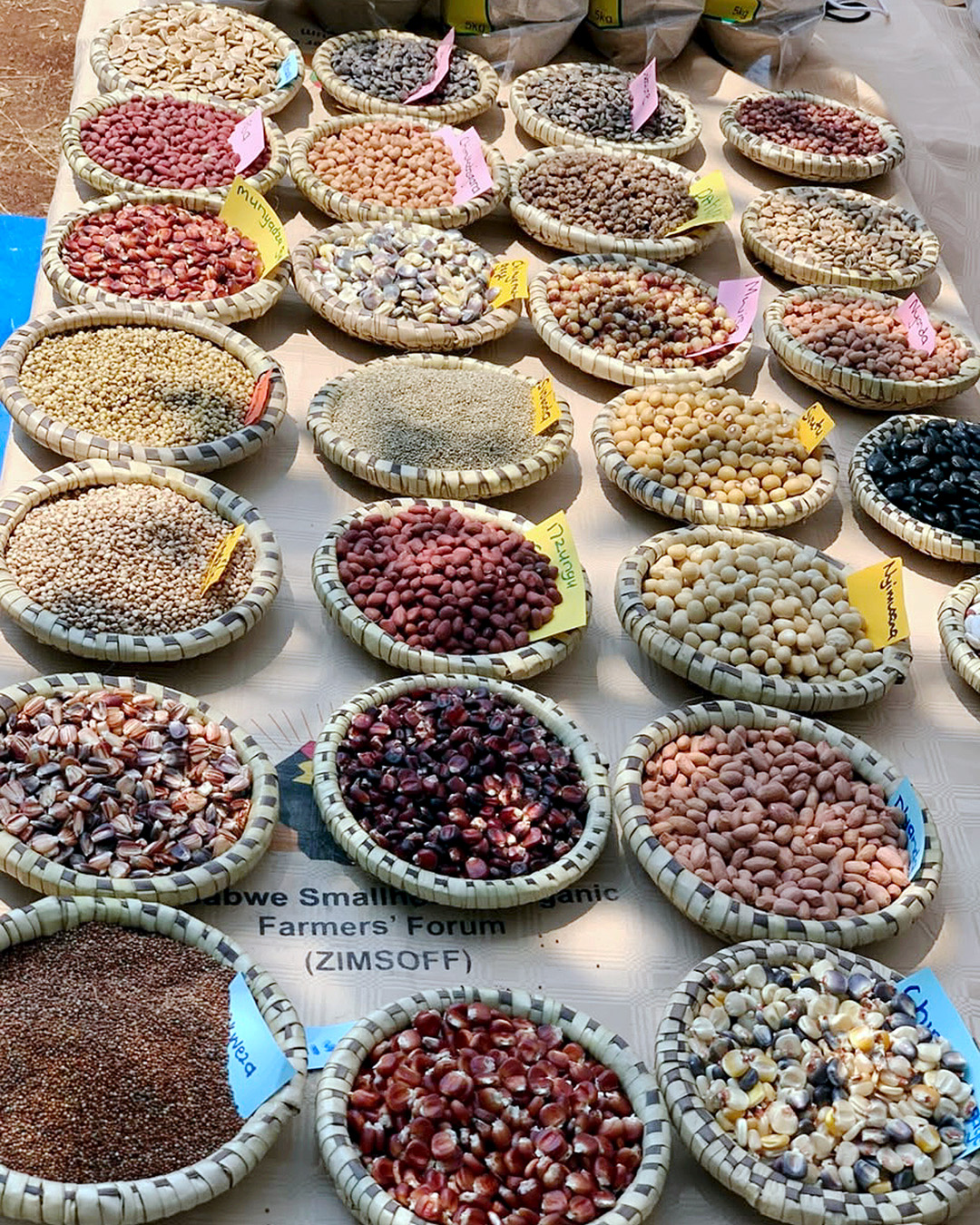
Among the exhibitors were women farmers from Shashe in Masvingo, participating under the Climate Resilience in Food Systems (CRIFS) initiative through the African Women’s Collaborative for Healthy Food Systems.
Led by Mai Mapako and her collective, the women arrived in bright prints, carrying traditional grains, dried fruits and herbs carefully preserved from their communities.
Their table were filled with seed varieties, as visitors gathered to explore the different varieties, ask questions and engage with the women about the traditional seeds they had brought from their communities. People stopped to touch, smell and ask questions. Farmers proudly displayed the names of their seeds in the vernacular languages of their provinces, reflecting not just what they grow, but the knowledge and culture carried with each seed.
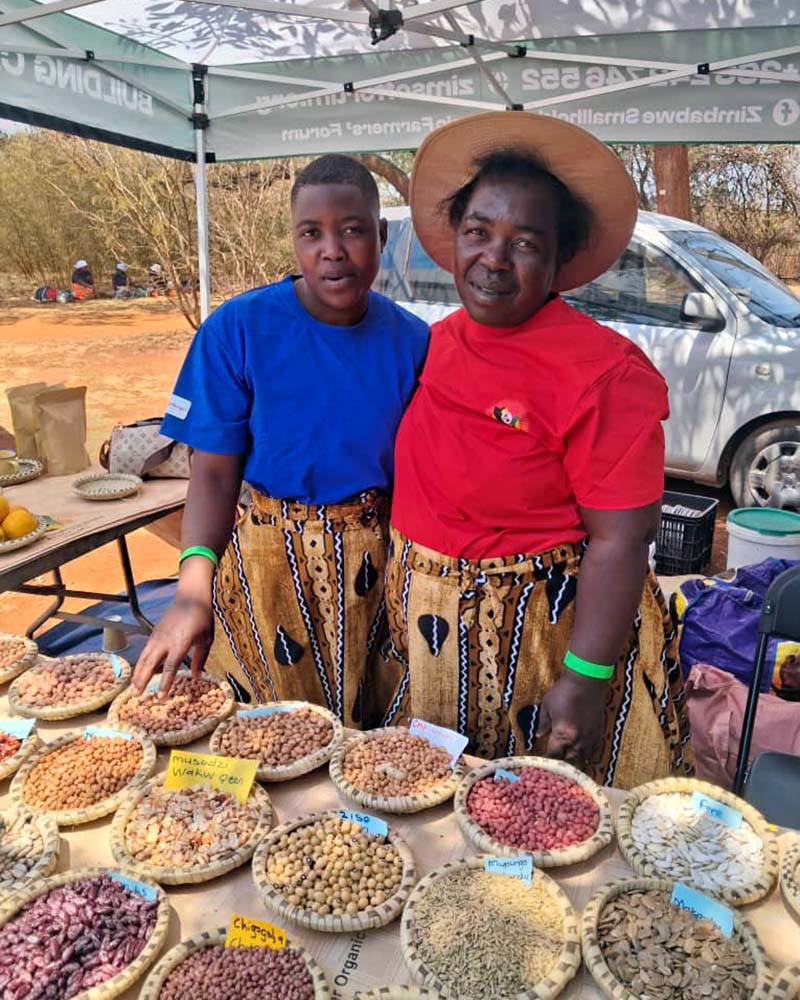
“We keep seed because seed keeps us,” Mai Mapako said, pouring a handful of small grains into a young woman’s hand.
Under the trees, knowledge moved from one generation to another.
An elderly woman from Bikita demonstrated how to store grain in ash to keep weevils away. A young agronomist showed participants how to make seed balls using manure and clay to support sustainable farming, soil restoration. Women exchanged stories, experiences and, importantly, seeds.
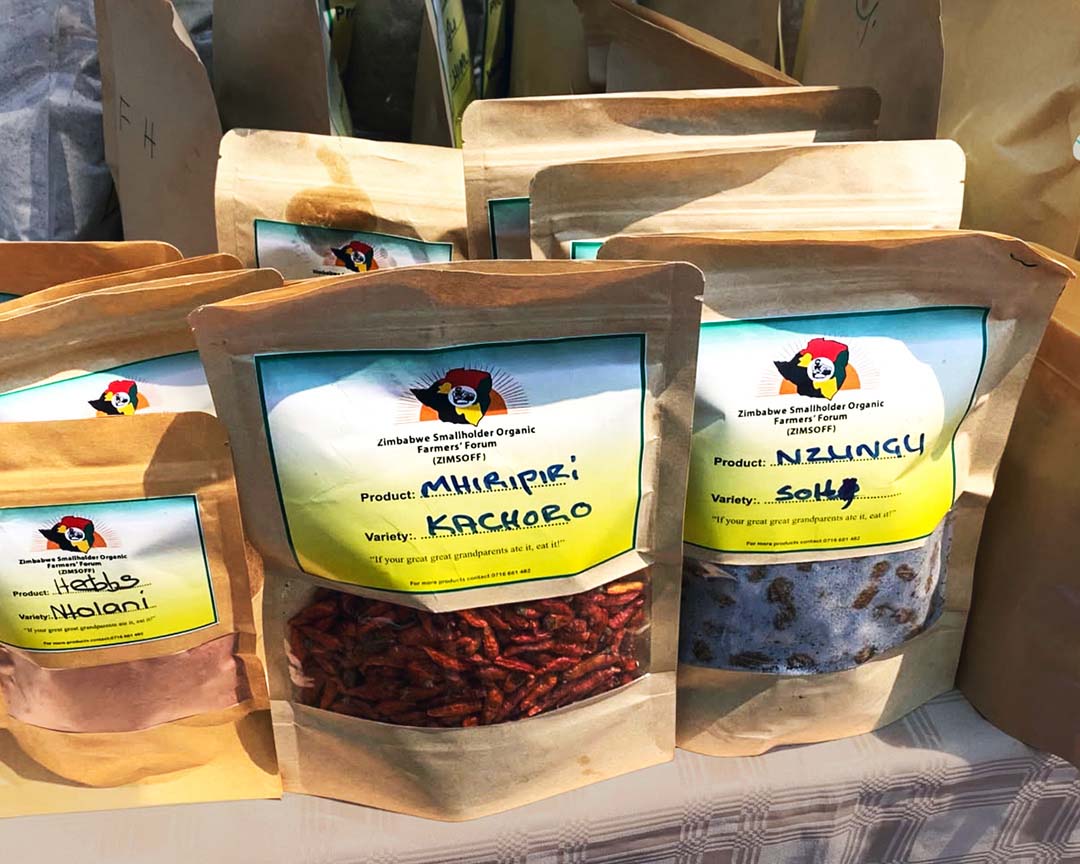
“Give me a cup of your red sorghum, I’ll give you my white pumpkin seed,” one farmer said.
Money changed hands too — but the real currency was knowledge, relationships and seed exchange.
While good seed is where the food journey begins, its true value comes to life when it nourishes people. The festival showed the full journey from saved seed to delicious, nutritious meals that feed families and communities. Visitors saw and tasted this progression. Traditional grains and legumes were prepared on site from sorghum, pearl millet and finger millet. These were transformed into a thick porridge known locally as sadza, a staple food for Zimbabwean families. Made primarily from maize meal, sadza is an important source of carbohydrates, which provide energy for daily activities.
These traditional grains were also made into rich fermented traditional drinks known as maheu which are a summer favourite. Delicious relish was available to eat with sadza cooked using cowpea leaves, Bambara nuts and pumpkin leaves with peanut butter.

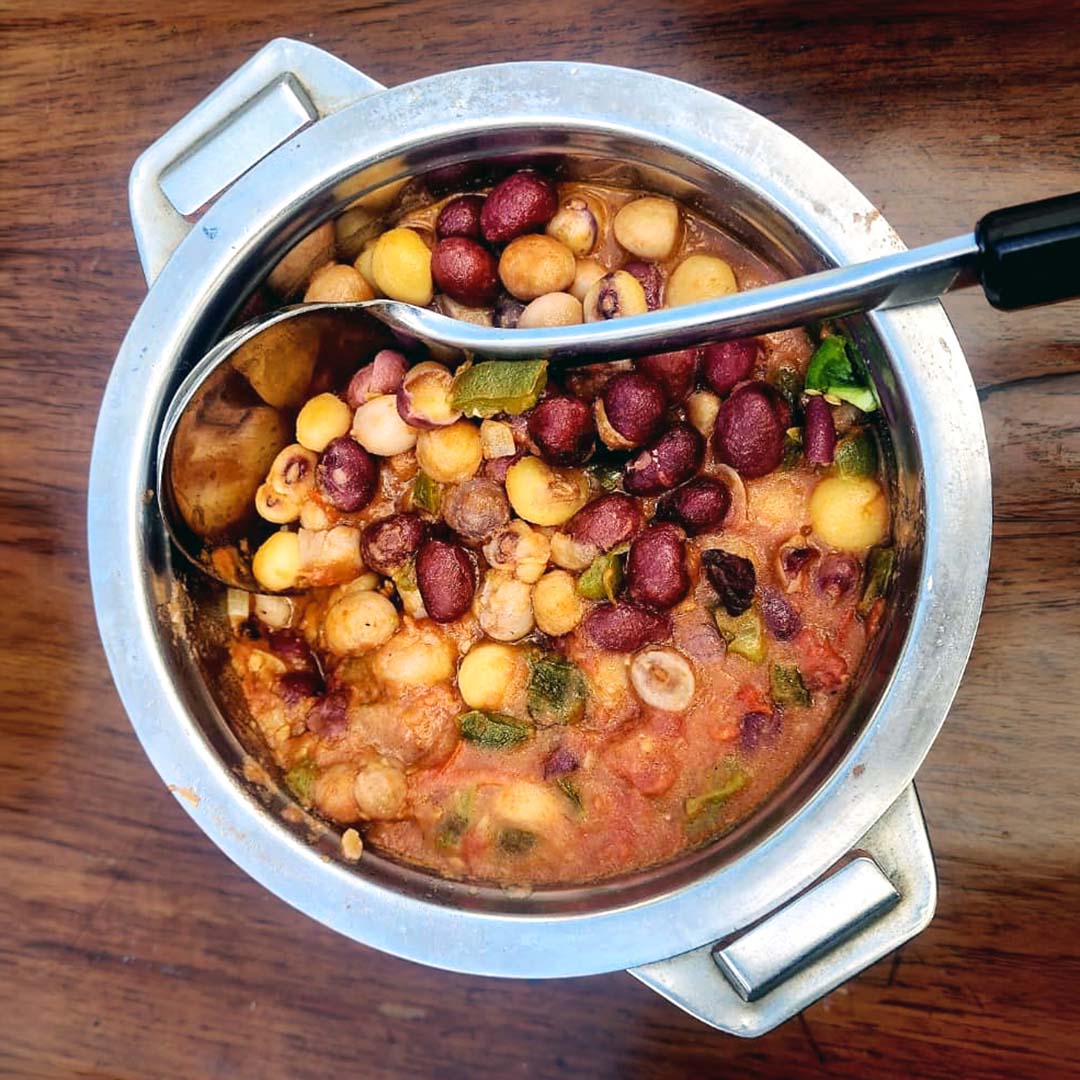
Why do our traditional grains and legumes matter? These foods are not only delicious but they are super foods. Finger millet, sorghum and pearl millet are gluten free and rich in calcium, iron, vitamin B and dietary fibre. Cowpeas and Bambara nuts are nutrient dense and excellent sources of plant protein.
For these women farmers, seed is more than something planted in the ground. It is part of their food systems, culture and resilience — and a resource they are determined to protect for future generations.
Contributed by Elsie Mojapelo.


