The African Women’s Collaborative for Healthy Food Systems Founder and Director, Elizabeth Mpofu, has presented a strong case for investing in women farmers as drivers of regenerative food systems at the 2026 Skoll World Forum.
In her presentation titled “Women Grow Our Future: Regenerative Food Systems for People and Planet”, Mpofu highlighted the critical role women play in global food production and the urgent need to strengthen their access to resources, decision-making platforms and climate-resilient agricultural practices.
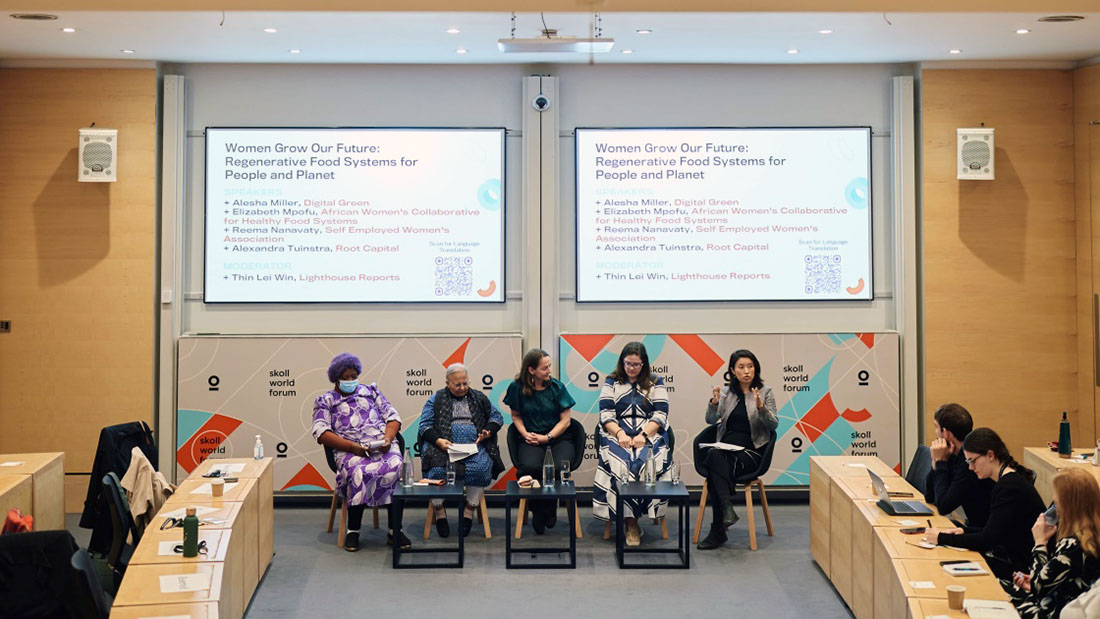
The global forum, which took place from April 21–24, brought together leaders, social innovators and organisations to address pressing challenges in social innovation, climate action and economic justice.
Mpofu noted that women farmers produce nearly half of the world’s food but continue to face barriers in accessing land, finance, markets and agricultural inputs. She said these inequalities undermine livelihoods and threaten food security, particularly in the face of increasing climate shocks.
Drawing on practical examples, Mpofu shared the story of a smallholder farmer in Masvingo Province, Zimbabwe, who lost her traditional seed varieties due to prolonged drought, leaving her vulnerable and dependent on external systems. She explained that through community-led seed-sharing initiatives and agroecological practices such as intercropping, mulching and water harvesting, the farmer was able to restore her seed base, improve soil health and regain food security.
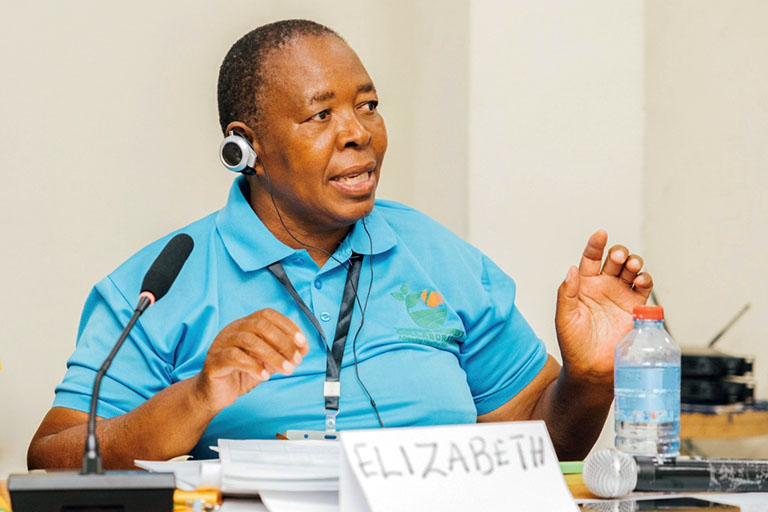
Today, the farmer produces diverse, nutritious crops and supports other women through seed sharing, reflecting a broader shift towards locally driven, regenerative food systems.
Mpofu emphasised that such approaches, rooted in indigenous knowledge and supported by innovation and inclusive financing, are key to building sustainable food systems. She also highlighted the work of the African Women’s Collaborative for Healthy Food Systems, which brings together women farmers across the continent to promote agroecology, protect seed sovereignty and strengthen nutrition and climate resilience.
The organisation operates and has membership in several African countries, including Zambia, Zimbabwe, Uganda, Senegal, the Democratic Republic of Congo, Ghana, Kenya, Swaziland, and Burkina Faso, focusing on empowering women as leaders in transforming food systems.
Mpofu called for increased investment in women farmers, not as beneficiaries, but as innovators and leaders capable of driving systemic change in agriculture and food systems. Her presentation comes amid growing global recognition of the need for inclusive and sustainable solutions to food insecurity and climate change.